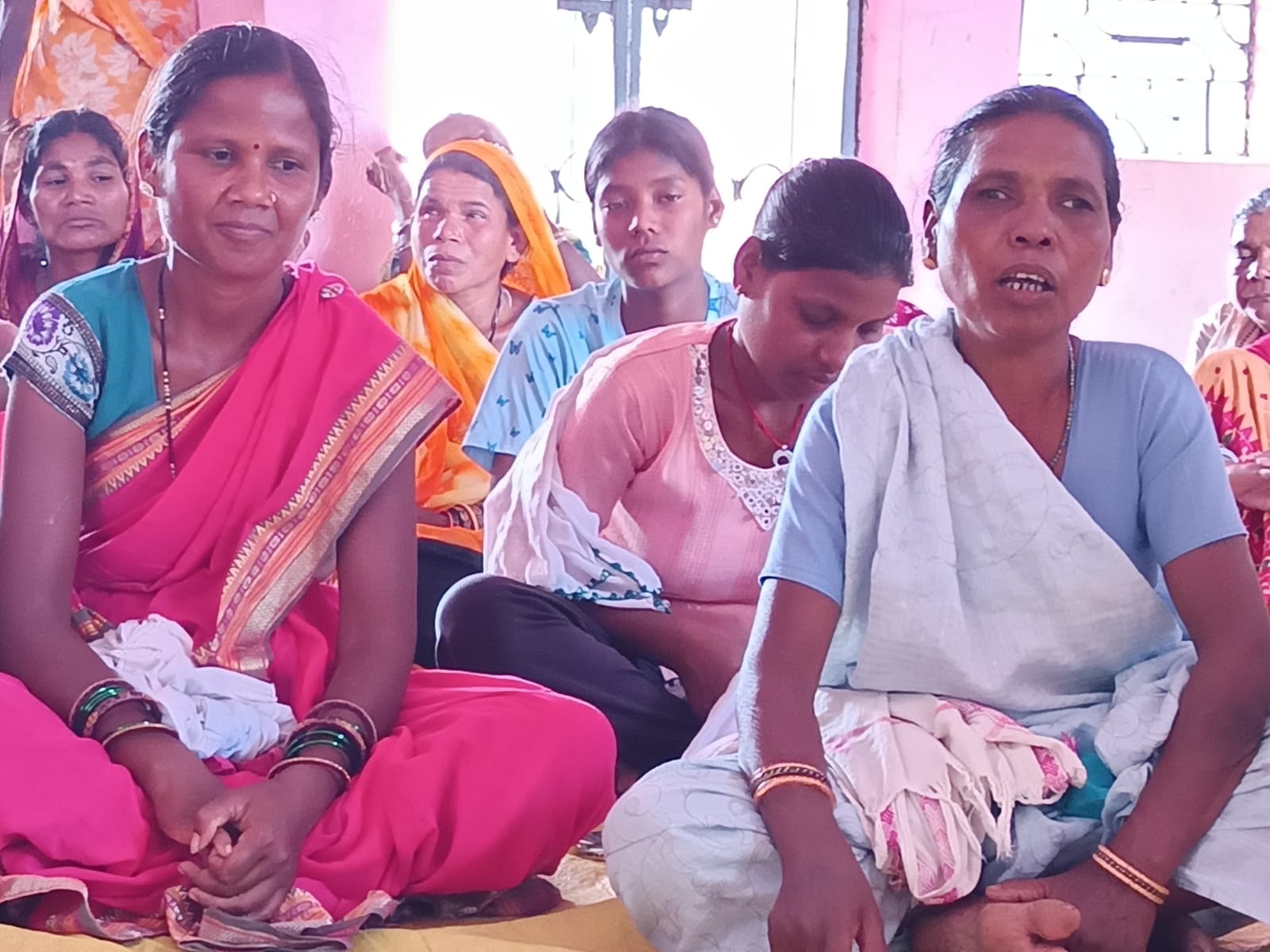
Mogra, Chhura Block, Gariaband
Jul 16, 2026
Khomeshari Bai is a resident of Mogra village, Charoda Panchayat, Chhura Block, Gariaband District, Chhattisgarh, India. A few years ago, her life was marked by fear, violence, and uncertainty. She experienced continuous physical and emotional abuse from her husband. The violence became so severe that she was eventually forced to leave her marital home and return to her parents’ house with her young child.
However, returning to her parents’ home did not immediately improve her situation. Khomeshari Bai struggled with deep emotional distress, anxiety, and hopelessness. She felt isolated and powerless, uncertain about her future and her ability to provide a secure life for her child. At times, the trauma and despair became so overwhelming that she even considered ending her life. She lacked confidence, was afraid to speak openly, and had little knowledge of her legal rights or the support services available to women experiencing violence.
During this difficult period, she learned about Lok Aastha Sewa Sansthan (LASS), an organization working on women’s rights, gender justice, and prevention of violence against women. She reached out for support. The LASS team provided counseling and encouraged her to seek legal protection through the Sakhi One Stop Centre, a government-supported support system for women facing violence.
Initially, Khomeshari Bai was extremely frightened. She repeatedly expressed her fear by saying, “I do not know anything. How will I speak? What will I say?” Recognizing her vulnerability, the organization provided continuous emotional support, counseling, and guidance throughout the process.
With support from LASS and the Sakhi One Stop Centre, a formal complaint was registered and legal proceedings were initiated. At the same time, Khomeshari Bai was connected to the Sangwari Mahila Manch (SMM), a women’s collective that promotes leadership, solidarity, and women’s rights. Through regular participation in trainings, workshops, and awareness sessions, she gradually learned about legal rights, protection laws, and available support mechanisms for survivors of domestic violence.
Equally important, she met other women who had faced similar challenges and successfully fought for justice. Hearing their stories gave her hope and confidence. She began to realize that she was not alone and that change was possible.
As part of the legal process, a Domestic Incident Report (DIR) was prepared and submitted. When she was required to appear in court for the first time, she was extremely nervous. Her hands and legs trembled with fear. However, with encouragement from LASS and members of Sangwari Mahila Manch, she found the courage to stand before the judge and speak openly about the violence and abuse she had experienced.
A government-appointed lawyer was assigned to represent her free of cost. However, during the course of the case, she felt that her concerns were not being represented effectively. The Khomeshari Bai of the past would have remained silent, but by then she had developed the confidence to advocate for herself. Encouraged by the organization, she directly approached the judge and formally requested that her lawyer be replaced. The court immediately accepted her request and assigned a new lawyer.
This was a turning point in her journey. She was no longer just a survivor seeking justice; she had become an active leader in her own struggle.
During the court proceedings, her husband failed to appear on two occasions. As a result, the court issued an arrest warrant against him. Demonstrating remarkable courage, Khomeshari Bai volunteered to assist in the process. Accompanied by police officers, she personally ensured the warrant was served and returned with official confirmation. This was the same woman who had once been afraid to enter a government office or speak in public.
As the legal case progressed, her husband repeatedly apologized and attempted to persuade her to settle the matter privately. However, Khomeshari Bai remained firm in her decision. She refused to compromise on justice and insisted that the years of abuse and violence should not go unaddressed.
After nearly two years of determination and persistence, the court ruled in her favor and ordered her husband to provide monthly maintenance support of INR 4,000 for her and her child. For Khomeshari Bai, this judgment represented much more than financial support—it was recognition of her dignity, courage, and right to justice.
Today, Khomeshari Bai lives independently and with dignity alongside her child. She has become an active leader within Sangwari Mahila Manch, supporting other women experiencing violence and discrimination. By sharing her own journey, she inspires women to speak out, seek justice, and claim their rights. She regularly assists women in accessing legal and social support services.
Recognizing her leadership potential, she was selected to participate in the Solar Sakhi Program, where she completed a three-month technical training in Rajasthan. After completing the program, she began working with solar energy technologies and equipment, gaining technical skills and expanding her livelihood opportunities. Today, she is recognized not only as a women’s rights advocate but also as a skilled rural technician.
Khomeshari Bai’s transformation has been extraordinary. The woman who once lived in fear, silence, and hopelessness has become a confident leader, a defender of women’s rights, and a source of inspiration for her community.
Her story demonstrates that when women have access to information, legal support, collective solidarity, and leadership opportunities, they can overcome violence and discrimination, reclaim their rights, and emerge as powerful agents of change within their communities.